
Fewer calls.
Faster tows.
Safer roads.
Aries Dispatch by Autura dramatically reduces radio traffic for 911 dispatchers, speeds up scene clearance for police, and gets tow operators to jobs faster.

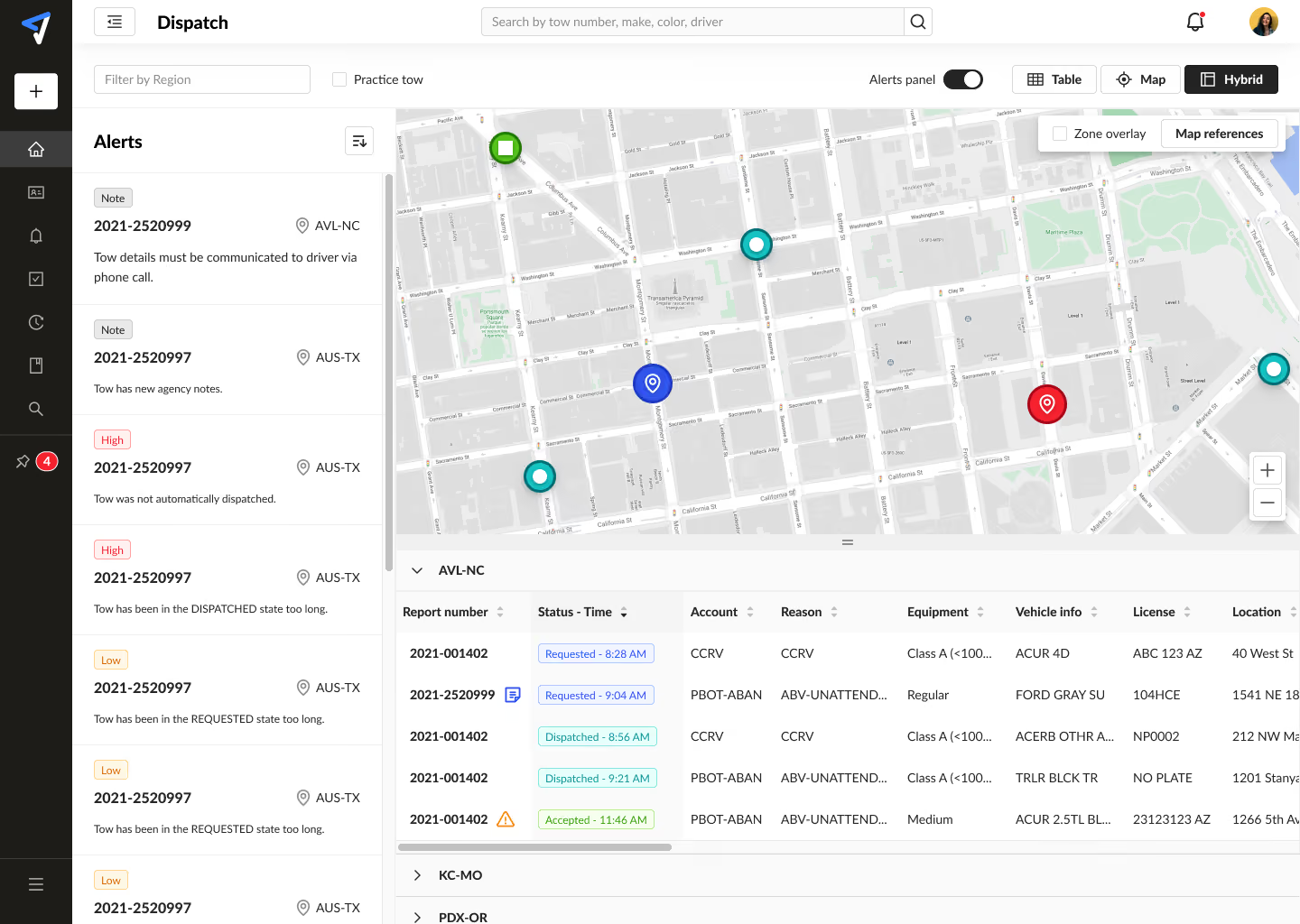
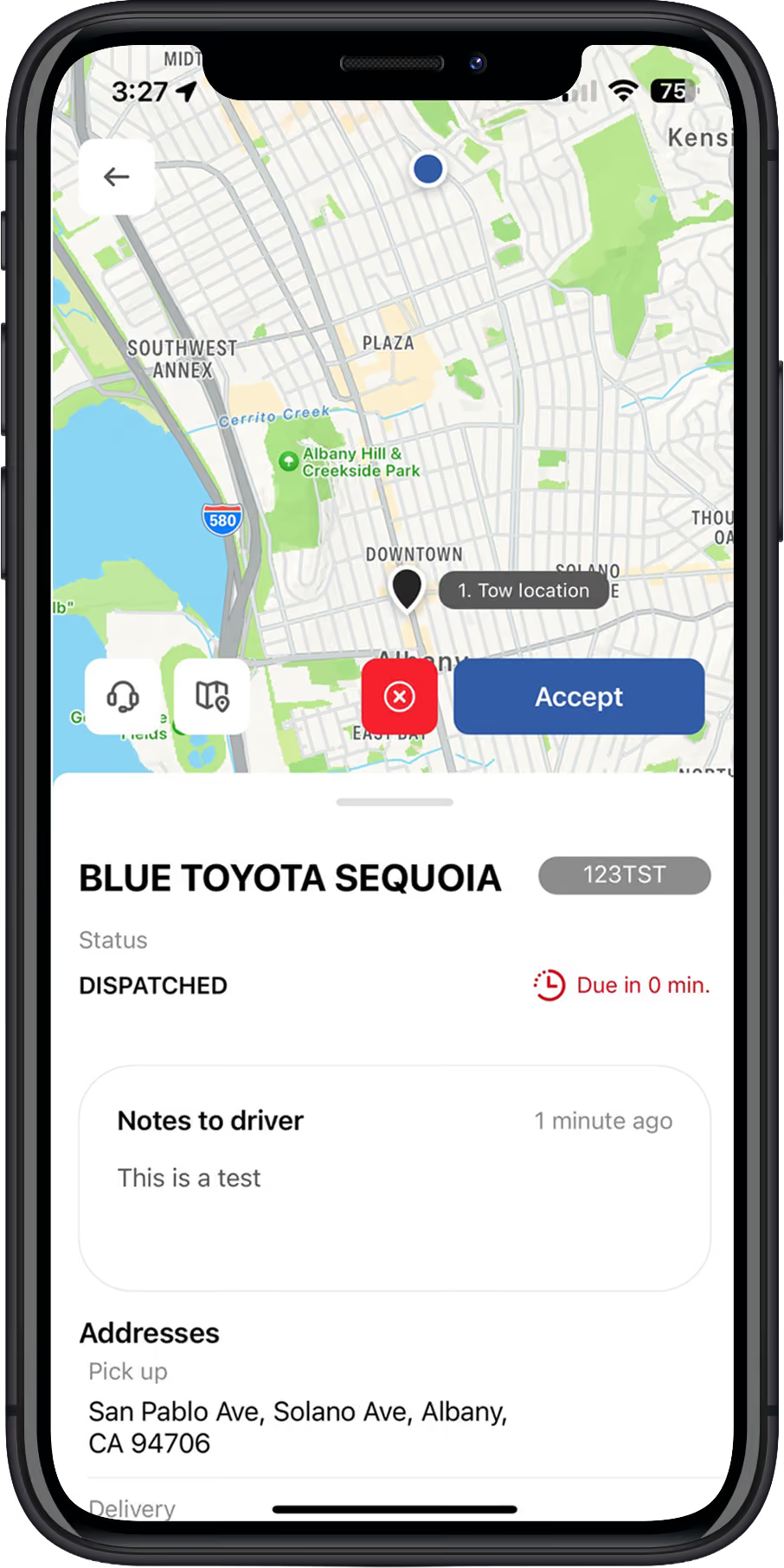

The same tow. Thirty minutes faster.
Every handoff in the manual relay requires a phone call. Aries Dispatch replaces the whole chain with one digital request.
The manual relay
Radios in the scene and vehicle details.
Logs the request, then calls the tow company.
Takes the call, then phones around for an available driver.
Finally gets the details, accepts, and starts driving.
No shared ETA. Everyone waits, exposed at the roadside.
Officer: "What's the status of my wrecker?"
Telecommunicator: "Let me call them again."
Sends the request from the MDC or mobile app. No radio, no call.
Applies rotation rules and assigns the right provider automatically.
Accepts in the app. Location and ETA shared with everyone.
Tracked the whole way. No callbacks, no unknowns.
When the request is digital, everyone moves faster.
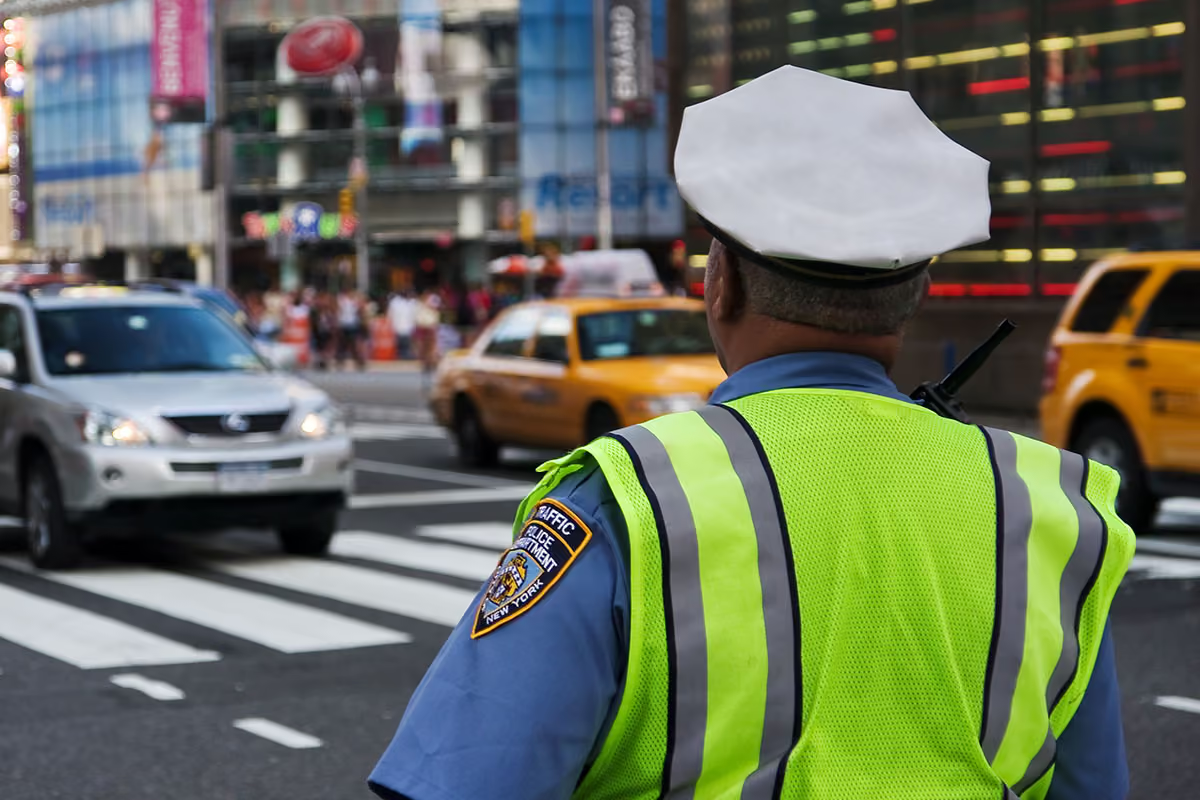
Law Enforcement

Telecommunicators
are handled by the software,
so dispatchers can focus all their attention on the calls that need a human.

Tow Providers

Motoring Public
A rotation engine your tow providers actually trust.
Build trust with a transparent, rules-based tow rotation system. Aries Dispatch automatically assigns calls according to your agency’s policies, logs every assignment, and gives both agencies and providers full visibility into how work is distributed.
Automated rotations
Every tow is assigned according to your published rotation rules, ensuring consistent, unbiased distribution with a complete audit trail.
Transparency for trust
Providers can see how assignments are made, increasing confidence, reducing disputes, and driving adoption across your towing network.
Every minute a vehicle sits on the roadside is risking someone's life.
The subtler problem:
a phone-and-paper program leaves no record.
How long did that tow take? Which provider is slow? Is the rotation fair?
Radio calls and handwritten logs can't answer any of those questions, so program improvement and contract negotiations are guesswork.

of municipal agencies still use manual methods in daily operations.
government agencies still run on legacy systems more than a decade old.
of government leaders say their IT infrastructure can't handle new technology.
Add it to your stack. Don't replace it.
Aries Dispatch integrates with Computer-Aided Dispatch (CAD) and the records systems agencies already depend on. A CAD integration can generate tow requests automatically, cut manual data entry, and keep tow rotations and real-time truck tracking managed inside the workflow dispatchers already use.
Streamline every single tow request.
Officers and dispatchers submit tow requests digitally instead of by phone, which clears the radio and the phone lines for higher-priority work. And because Aries Dispatch integrates with the systems an agency already runs, requestors don't have to switch between screens to get a tow moving.
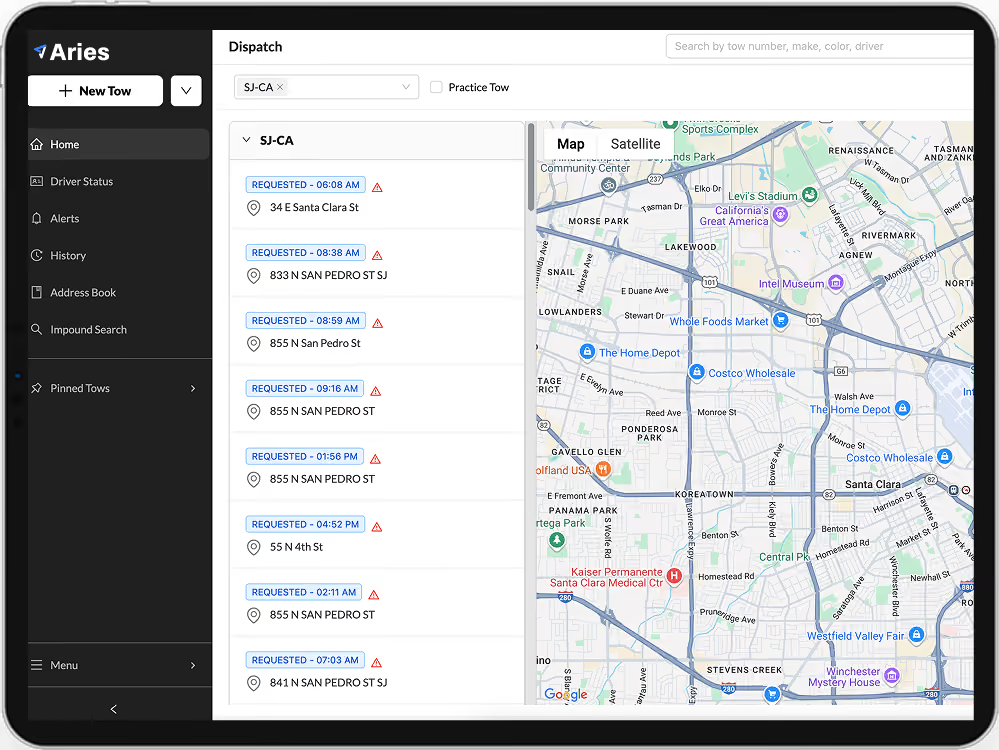
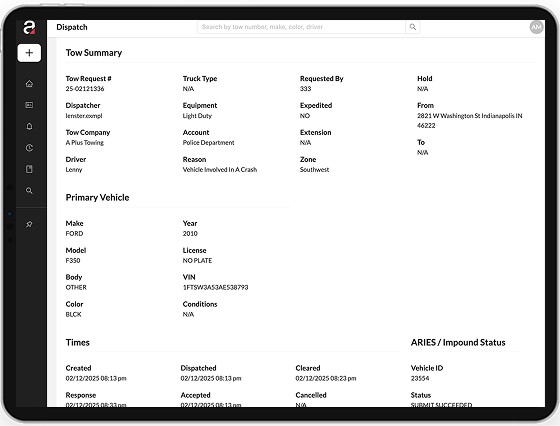
Assign the right provider automatically.
Aries Dispatch assigns each tow to the right provider at the right time — with the right equipment — based on the agency's own rotation rules and contract agreements. Closest-truck logic, rotation order, equipment class, and provider agreements are all configurable to how the jurisdiction actually operates. No dispatcher picking up the phone. No guesswork about whose turn it is.
Real-time status updates and ETAs.
Everyone who needs to know where a tow is can see its status. Officers get live location and arrival time notices on their device. Dispatchers see availability and status across all providers. That visibility is what lets a person manage a dangerous scene instead of babysitting a phone.


Finally, real numbers on your towing program.
Every request, acceptance, response time, and completion is captured, so an agency finally has the data to see how its towing program performs. Visualize response times by provider, tow volume, rotation fairness, and more. Use this to hold providers accountable to their agreements, negotiate contracts on real numbers, and prove the program is working.
Proven results. Expert insights. Real success stories.
From industry research to customer success stories, explore the resources that help agencies improve safety, streamline operations, and build stronger provider partnerships.
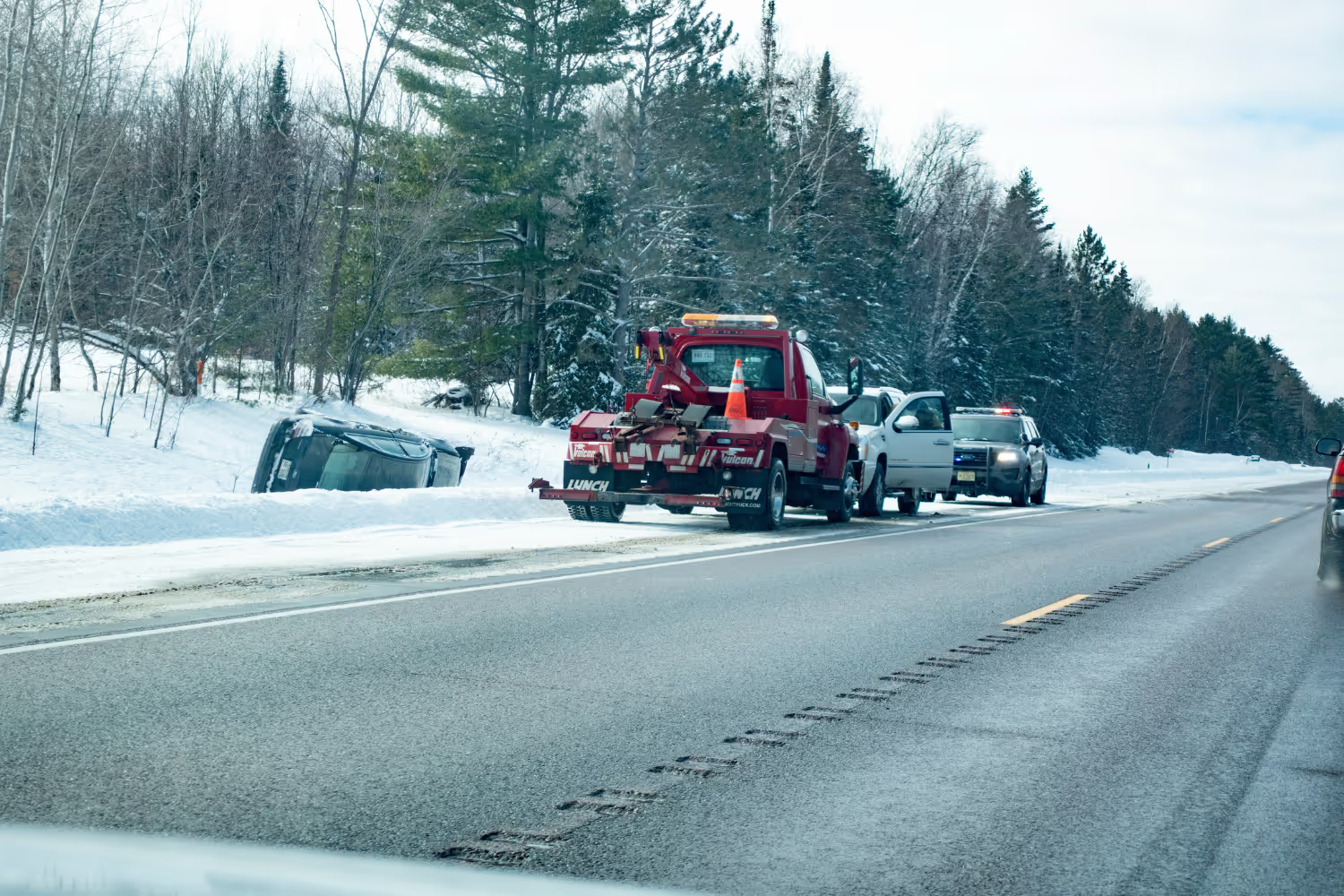
When Government Towing Works, Everyone Moves Faster
Efficient government towing saves lives and reduces roadside risk. Read how digital dispatching & integrated towing software cut delays, improve safety, and strengthen agency–tower collaboration.

Every Minute on the Roadside Increases Risk: Towing Program Improvements Can Save Time and Lives
Struck-by incidents are the leading cause of officer fatalities. Learn how modern towing technology helps agencies cut exposure.
How Fort Worth PD Improved Towing Safety and Streamlined Operations
Fort Worth PD modernized their towing program with Autura, cutting dispatch times by 50%, saving 30,000+ hours, and contributing to nearly 500 fewer highway accidents.


Faster tow response times
Department hours saved
Accidents prevented
Getting the tow truck to the scene is just the start, not the finish.
The Aries suite connects each towing stage so a vehicle's record follows it from the roadside through the impound lot — and your team isn't re-keying the same data into disconnected systems.
Aries Dispatch
Digital tow requests, automatic rotation assignment, and live status updates and ETAs from the roadside.
Aries Impound
Centralized vehicle storage, fee processing, and compliant lien and notification workflows from a single system.
Aries PPI
Digital tow notifications, faster vehicle clearance, and self-serve vehicle lookup — without the phone calls.
AWS GovCloud (US)
Aries runs exclusively on AWS GovCloud (US), the cloud infrastructure built to meet the compliance requirements of U.S. government agencies. Because so many infrastructure-level security validations are already handled through AWS authorizations, agencies can move through procurement faster and carry less of the compliance burden themselves. Aries Dispatch is also available through AWS Marketplace, which can further simplify purchasing.
Common questions. Quick answers.
Aries Dispatch takes a tow request from an officer or dispatcher, assigns it to the right provider based on your agency's rotation rules, and gives everyone live status and ETA. The whole engagement happens digitally, so nobody's calling a tow company from the roadside or radioing dispatch for an update.
From the MDC in the vehicle or the mobile app on their phone. Officers enter the vehicle details, submit, and watch the assigned truck's location and ETA without needing to get back on the radio.
Yes. The rotation logic and workflows are configurable to your rules, contracts, and agreements. It's configuration, not custom software built from scratch, so you get a setup that fits your program without a one-off build to maintain.
Aries runs exclusively on AWS GovCloud (US), the cloud infrastructure built for the compliance requirements of U.S. government agencies. Because many infrastructure-level security validations are handled through AWS authorizations, a good portion of the security review is already covered before your team starts.
Most agencies are up and running in roughly 60 to 90 days, including configuration to your program rules and training for officers, dispatchers, and service providers.
Start with a demo so we can map our software to how your program runs today. Aries Dispatch is also available through AWS Marketplace, which simplifies procurement for agencies that buy that way.
No. Aries Dispatch works alongside the systems you already run. A CAD integration can generate tow requests automatically and keep rotation and truck tracking inside the workflow your dispatchers already use. This means you are adding towing coordination without replacing anything.
Aries Dispatch assigns each tow by your agency's published rotation rules, which can account for rotation order, closest available truck, and equipment type. Every assignment is logged and visible, so providers can see that distribution is even. That record is also what you reference if a provider ever questions rotation fairness.
They do, and it's the part agencies tend to worry about most. Providers receive requests directly in the Aries mobile app or the Autura Towing Management Software they already use, then accept the job and complete it digitally. Most find it easier than the phone calls it replaces. Bringing providers into the conversation early turns hesitation into buy-in, and the fairness of a transparent, logged rotation is usually what wins them over.
No. Autura doesn't own tow trucks or storage lots, employ tow operators, set towing or storage rates, or provide tow services. Autura makes the software that helps your agency and your contracted providers run towing programs.
It depends on where you're starting, but the pattern is consistent. Utah Highway Patrol cut response times by 50% and eliminated more than 50,000 dispatch calls. Nevada Highway Patrol went from 39 minutes to 22 and dropped radio traffic 90%. Fort Worth PD saved more than 30,000 staff hours. A demo walks through what that could look like for your program.