Why We Rebuilt Autura Marketplace


🔎In this article: On July 14, 2026, we unveiled a full Autura Marketplace platform rebuild. Read on to learn what sellers and buyers told us, what changed, and how we approached the migration.
Officially, the morning hours of July 14, 2026 were when the Autura team launched the rebuild of Autura Marketplace, the newest, most enhanced version of our unclaimed vehicle auction platform. But behind the scenes, the team had been working for months, and beyond the migration hour we continue to fine-tune, add-on, and enhance what we’ve built.
Today, I’m sharing why and what it means for the people who list, sell, bid, and buy on Autura Marketplace every day.
When we originally launched our legacy marketplace auction software, it worked well. But the towing and recovery industry and impound vehicle buyer habits are constantly changing. And, like with any software, the platform accumulated technical debt and suffered from a fragmented user experience and limitations that slowed feature development for sellers and buyers alike.
Patches, workarounds, and bug fixes weren’t closing gaps for our customers, so it was time to make a bigger, more impactful change.
3 Things Buyers Told Us and How We Changed
1) Bulk Bidding Was An Option Buyers Didn't Have
High-volume buyers, dealers, exporters, and salvage yard managers wanted the ability to bid across many vehicles at once. On our legacy platform, there were ways you could do this, but it was (we own this) tricky, and not something available to every buyer.
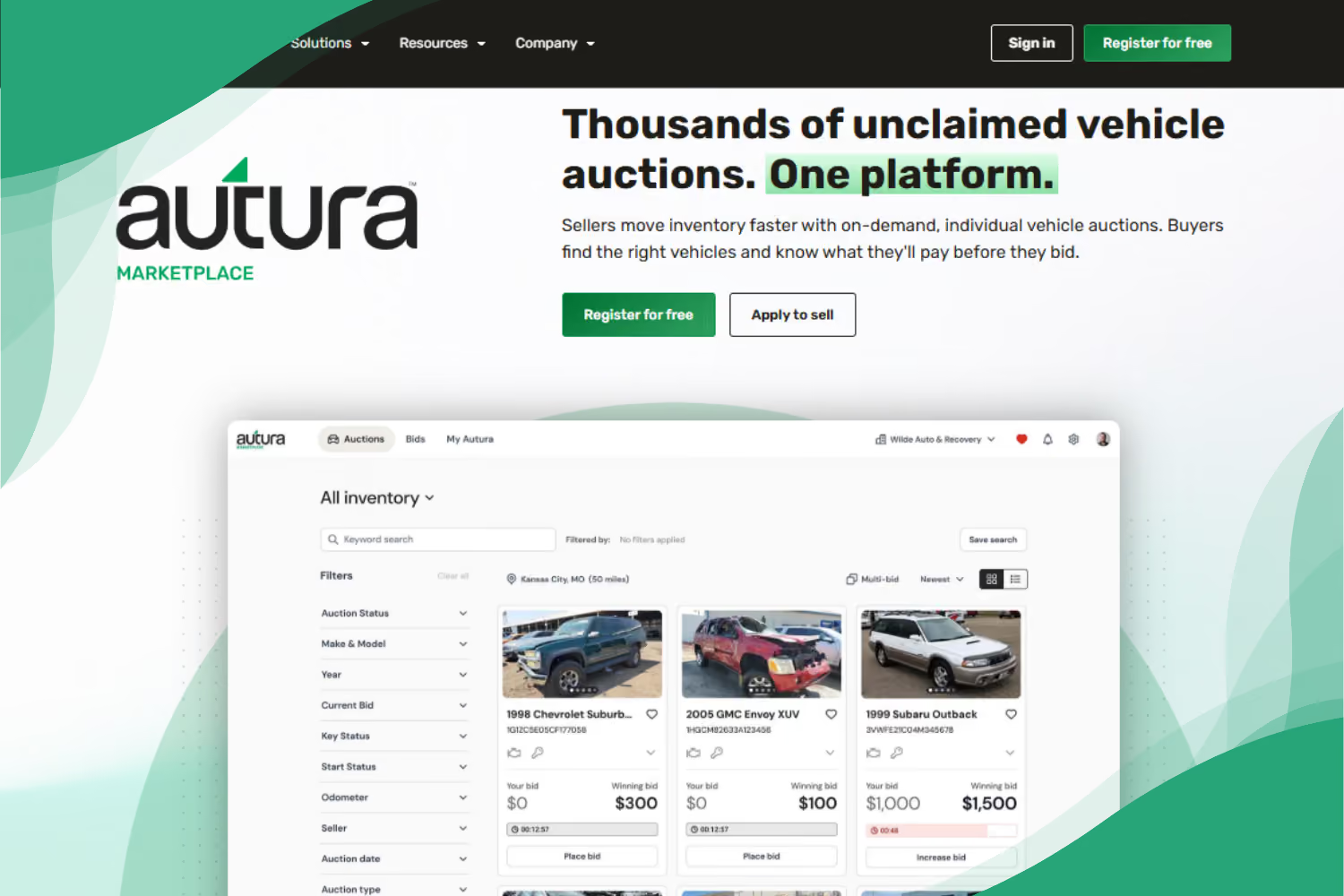
What changed: Multi-bid select mode is now open to all buyers. That means you can select multiple vehicles on Autura Marketplace – even from different sellers – and place bids across them in a single action, speeding up high-volume purchasing.
2) Finding the Right Vehicle Required Manual Searching
Before July 14th this year, buyers on Autura Marketplace had no easy way to save search criteria or get notified when new inventory matched what buyers were looking for from sellers. Every search session mean starting from scratch or locating a bookmark or open tab (and honestly, we all have too many of those open, right?).
What changed: Buyers can now save search criteria by make, model, price range, condition, and location, and opt to receive notifications when matching listings go live. New inventory posts continuously, not on a batch schedule, so there's fresh listings daily, motivating those on the hunt for the best deal on the perfect vehicle to keep coming back to browse.
3) Listing Quality Varied by Seller
Over time and through various iterations and acquisitions, our legacy platform allowed marketplace sellers to choose how much (and in many cases, how little) listing information to include. This resulted in inconsistent and sometimes altogether lacking vehicle details, leading buyers to have low (or no) bidding confidence.
What changed: Every listing on the new Autura Marketplace experience includes enforced condition fields, comprehensive images, and transparent feed breakdowns so buyers know exactly what they’ll pay. This gives buyers a consistent baseline of information across every vehicle they’re considering.
3 Things Sellers Told Us and How We Changed
1) Waiting on Bulk Auction Events Slowed Inventory Turnover Down
Just like live auction events our sellers would host, the legacy Autura Marketplace platform held auctions where vehicles were grouped into bulk, scheduled auction events. While conducted online or in conjunction with live sales, this still meant that sellers' inventory had to sit on their lots for days or weeks before units were eligible to go up for bid. Lot space is expensive, and every day a vehicle sat unlisted was a day of cost with no return.
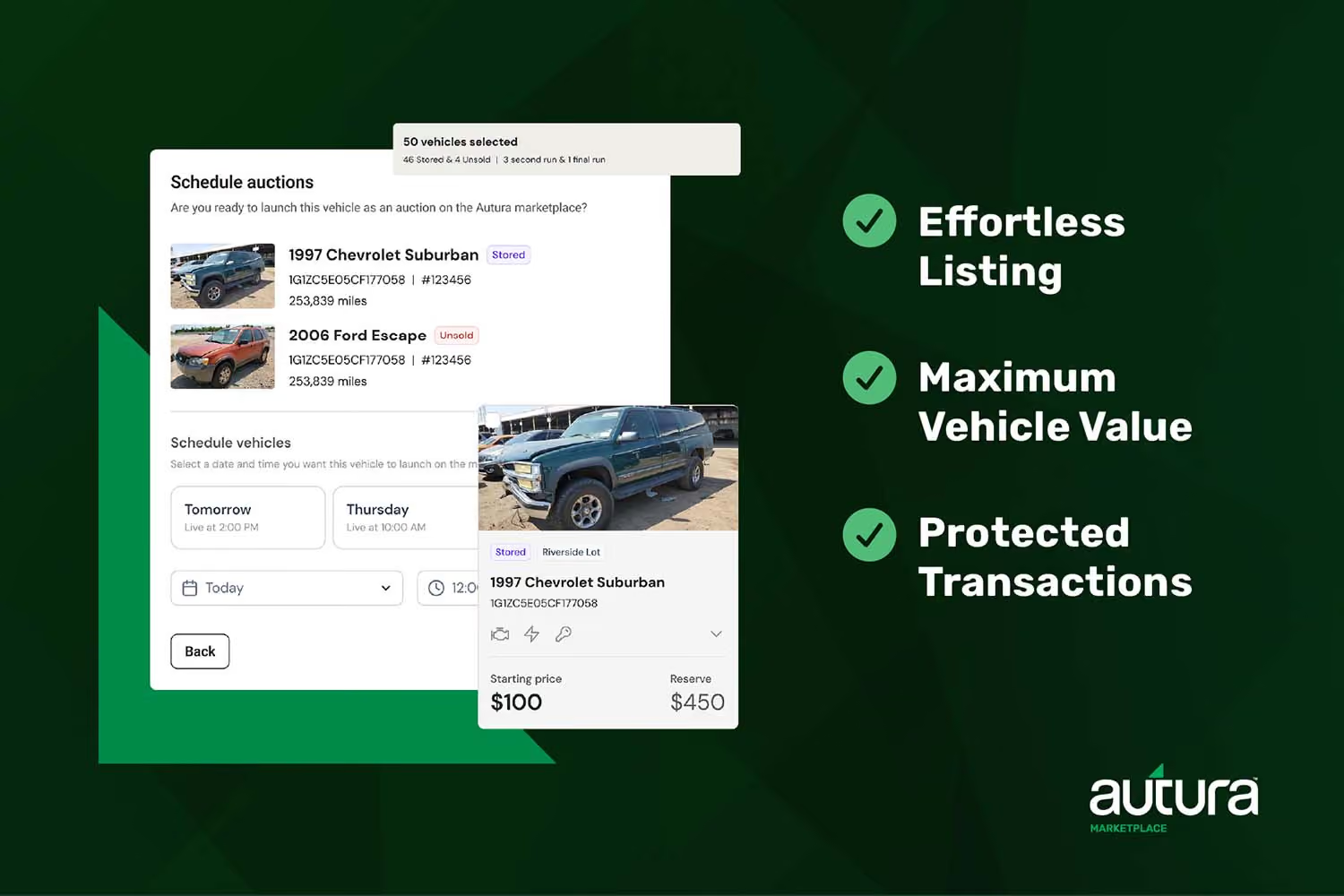
What changed: This is one of our bigger, more foundational changes. Now, every vehicle on Autura Marketplace gets its own on-demand auction. That means as soon as sellers list it, a vehicle can start collecting bids, no waiting for a scheduled event. And with the option for sellers to emulate an event with bulk scheduling for vehicles, vendors on the enhanced Autura Marketplace have auction options giving them the best of both worlds.
2) Payment Was Fragmented, and Therefore Risky
Sellers were working across multiple payment methods and collecting partial balances at time of pickup, which meant chasing buyers down and reconciling payments manually. Not ideal.
What changed: Autura Verified Payments (AVP) now handles every platform transaction. The full balance is captured digitally, at time of sale, and held until the deal closes, removing the manual, awkward payment chase.
3) Listing Vehicles Took Too Much Manual Work
Getting a vehicle to market meant documenting it by hand, then re-entering that same information into a separate towing management system (TMS) if a seller used one.
What changed: We added more standardized field designations for easily inputting special notes about vehicles and the ability to upload lists of vehicles via CSV. And, for sellers using the TOPS and Aries towing management systems, we introduced direct, two-way integrations that eliminate re-entering vehicle data twice.
Code and Compliance Enhancements
The changes we’ve shared aren’t the only ones we made, and there are more to come.
When we transitioned all active buyers and sellers to the new Autura Marketplace experience on July 14th, they logged on to a platform built on modernized code, integrating directly with Stripe for payment transactions, and with many other structure-focused technical changes.
That enhanced code base means sellers and buyers can move through the listing, selling, browsing, bidding, payment, and pickup processes faster and more securely. And it means that as the industry and our customers' needs continue to change, we can address issues and answer feature requests more fluently.
The Launch Process
Moving every seller and buyer to a new platform took careful consideration and coordination across internal teams and external vendors we built integrations with, such as Stripe.
We ran a formal go/no-go review before rolling any changes out, and built the migration to preserve what customers already had. For example:
- Existing account credentials carried over: Active sellers and buyers who used the platform within the last year logged in with the same email and password.
- Lead-in communications and timing discipline: we gave sellers a transition window with continued access to the previous platform for 30 days post-launch so they could close out in-progress business and pull historical records.
Still, changes like this are tricky and imperfect. Autura’s Customer Success Managers (CSM) and support teams have been working with users on the buy and sell side, and we’ve been running QA cycles as real auction activity surfaces edge cases that require new or special approaches.
Note: If you hit friction during the transition, please contact us.
Why It Was Worth It
The legacy Autura Marketplace platform could have kept serving our users as it was – it just couldn’t grow into what sellers and buyers actually need now or in the near future.
What we’ve rebuilt gives sellers a faster, easier path from impound lot to successful sales, and buyers a more consistent, transparent, and trustworthy way to find, bid, and buy vehicles.
And it’s a foundation we can confidently build on as the industry evolves.
Have questions about a specific feature or how the update affects your account? Reach out to your CSM or contact our support team.