Impound Lots: The Nation's Billion-Dollar Graveyards


🔎In this article: Kevin Leigh reveals how unclaimed vehicles fuel one of America's most successful recycling industries, making automobiles the most recycled consumer product on earth. You'll learn how impound lots connect vehicles with recyclers, repair shops, parts suppliers, and buyers, why vehicle recycling generates billions of dollars in economic activity each year, and how modern online marketplaces are helping move these valuable assets into their next lifecycle faster and more efficiently.
I've spent more than 40 years in the car business, with humble beginnings as a “lot boy” for my dad's used car lot in Lancaster, New York. I sold new Fords, ran finance desks, and built auction software. When I graduated to building, managing, and running what has now become the online impound auction marketplace platform at Autura, I discovered a whole new side of the auto industry.
Today, I’m sharing a few surprising myths about impound lots that demonstrate why the “junk” you think they contain is more likely a treasure trove.
Myth #1: There’s Mostly Junk in a Junkyard
When I first shifted my focus to the impound industry, I expected to see mostly junk; vehicles nobody claimed, headed straight for the crusher or shredded into piles of waste steel. Instead, I witnessed buyers from out of state fight over dented sedans with undisclosed miles. I watched wrecks sell in minutes in bidding wars by salvage yards. I saw recyclers bid like the metal was gold. Actually, some of it is GOLD, and here’s why.
Ask most people to name the most recycled consumer product on earth. You’ll hear guesses like aluminum cans, glass bottles, or plastic. The real answer sits on four flat tires behind a chain link fence at your local impound lot.
With steel recognized as the most recyclable material (by weight) on planet Earth, and because 65%-75% of a vehicle’s weight is steel or iron, the most recycled consumer product is actually the automobile.
A few numbers that stopped me cold the first time I saw them:
- About 95% of vehicles retired in the United States get processed for recycling each year. That's roughly 12 million vehicles
- Worldwide, the number of recycled vehicles is about 27 million
- Recyclers process about 26 cars every minute.
No other consumer product comes close.
These astounding numbers show a car is not trash. It's a rolling warehouse of raw materials. About 86% of a vehicle's content gets recycled, reused, or recovered for energy. Steel makes up more than half of the average car by weight. Recyclers in the US and Canada pull more than 14 million tons of steel from vehicles each year. That's enough steel to build about 13 million new vehicles.
Watch a recycler work a car and you see a system. They siphon the gas, clean loose change from between seats, and pull the catalytic converter for its platinum and palladium. They sell almost every usable part, from doors to alternators. What's left gets crushed, shredded, and smelted into new rolls of steel.
The environmental impact? Every year:
- Recycled auto parts and metals save around 85 million barrels of oil
- The industry cuts greenhouse gas emissions by up to 30 million metric tons
- Old vehicles come back as bridge beams, appliances, and the frames of new trucks.
The money is real, too. Auto recycling is a $25 billion industry in the United States. It employs more than 140,000 people across thousands of impound and tow yards and processors. So that's the billion-dollar graveyard. Except it's not a graveyard at all. It's a gold mine sitting above ground.
Myth #2: Recycling Profit Happens Outside the Tow Yard
In actuality, a huge share of recycled vehicles enter the stream through one door: the impound lot.
Every day, accidents, abandonments, and unpaid tickets cause vehicles to be towed. Many owners never reclaim this property. Tow companies hold the car, file lien paperwork, and wait. After some time, the law lets them sell it.
So, who buys a car nobody came back for?
There's a ladder of end buyers, and every rung represents a different perspective.
- Used car lots purchase nicer vehicles they can put right back on the road.
- Body shops buy those that need collision work.
- Mechanic shops grab any with electrical or mechanical problems.
- Parts recyclers strip the rest and sell the pieces online through eBay Motors, Car-Part.com, and giants like LKQ (one of Autura Marketplace’s largest buyers).
- Many hulks ship overseas to recycling facilities.
Whatever remains gets crushed and smelted into new steel.
And in between sit everyday retail buyers. Some want a cheap winter beater. Some need a daily driver. Plenty of parents are hunting for their college kid’s first car. The automobile is amazingly recyclable and resalable. Almost nothing goes to waste.
What Autura Marketplace Is Building for Tow and Impound Lots
For decades this market ran on fax machines, index cards, and live auctions in gravel lots on Saturday mornings. Sellers took whatever small crowds would pay. Buyers drove hours to bid on ten cars, just to win two. Solid vehicles sold for scrap prices. It “worked” but nobody could see the whole market.
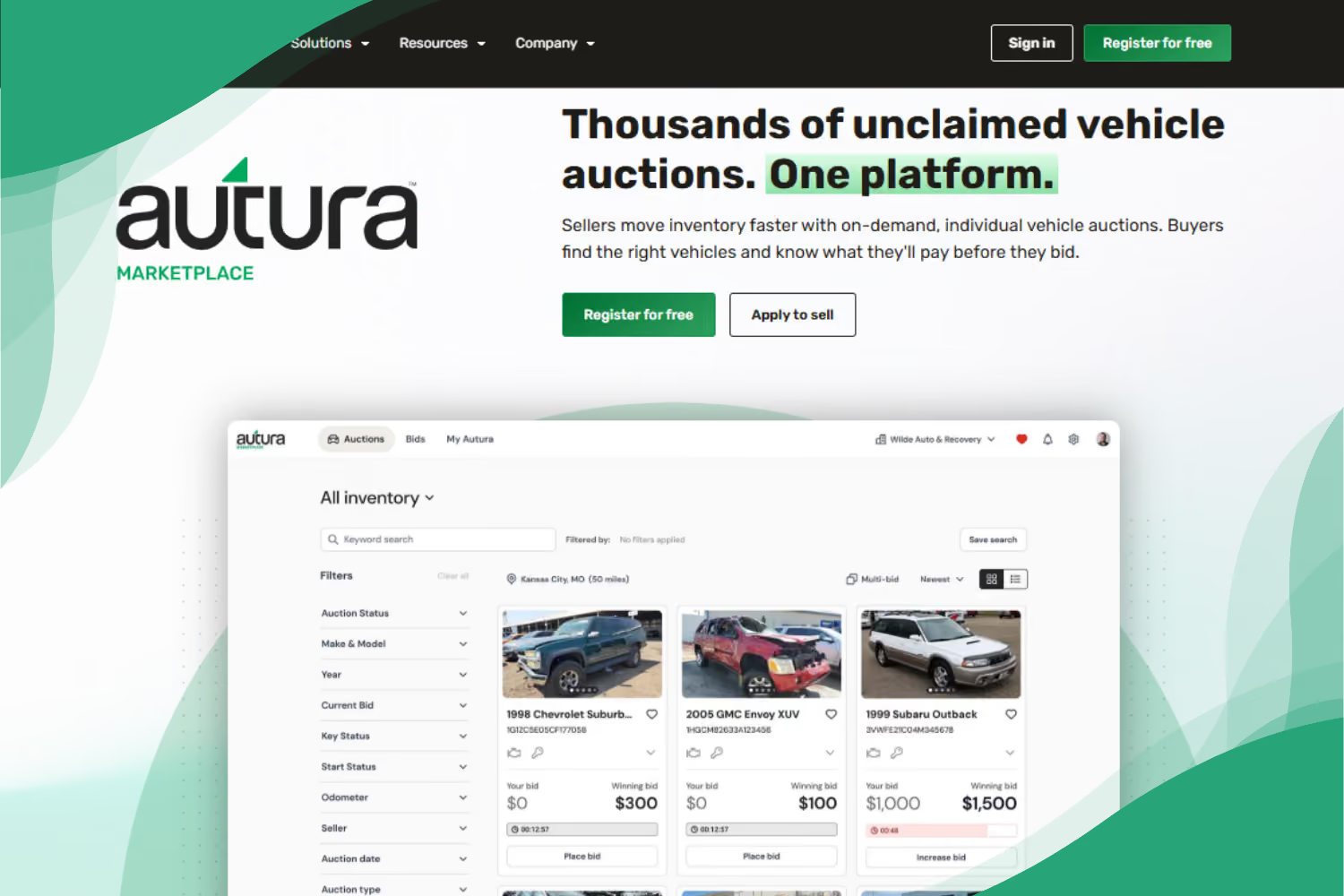
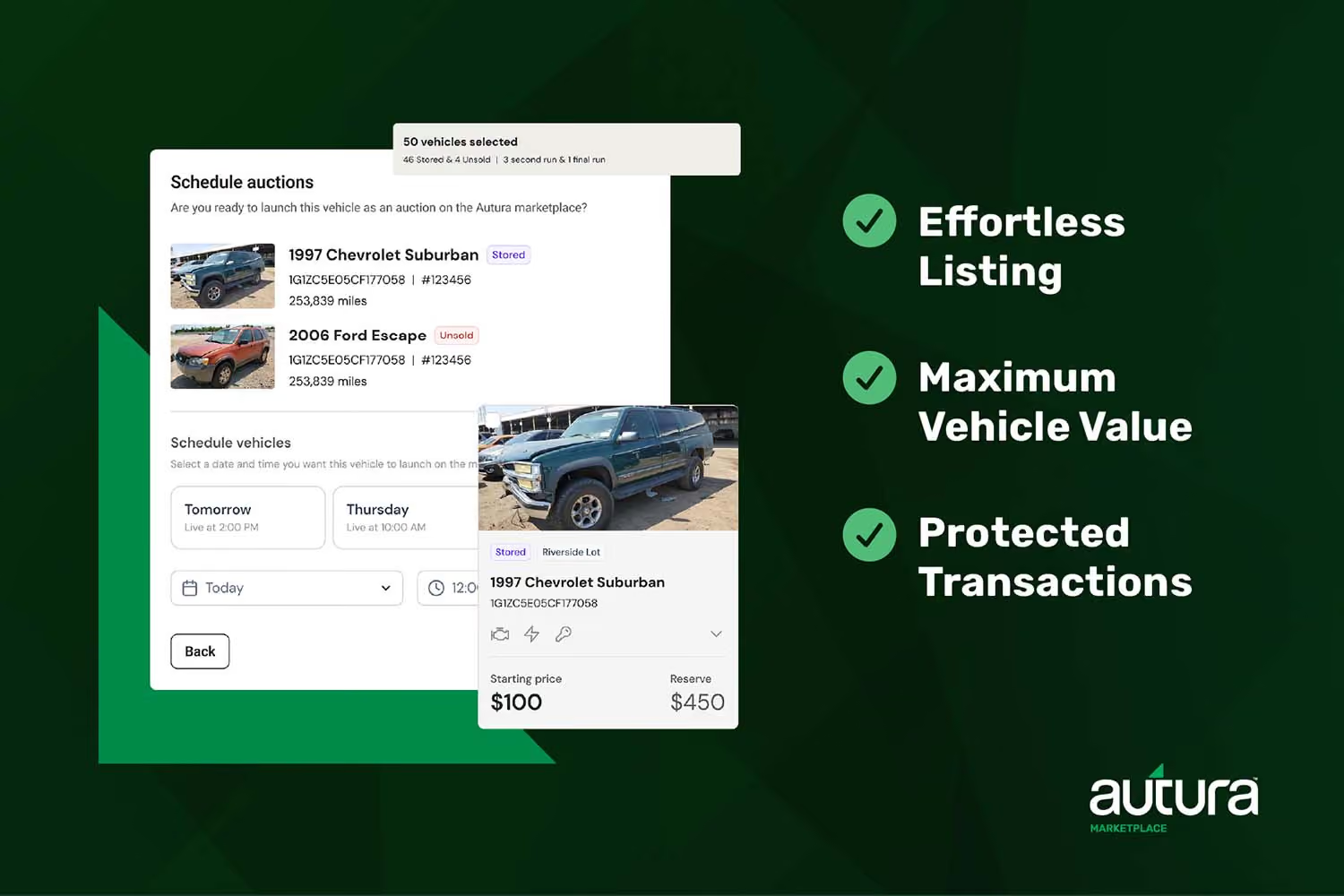
That's the antiquated system my Autura Marketplace team is working to modernize. We built a digital impound and unclaimed vehicle auction marketplace. Sellers list right from their yard (the greenest way to sell is not to move the car until sold.) Buyers bid from anywhere.
Today, Autura Marketplace lists more than 77,000 unclaimed vehicles a year. More than 230,000 registered buyers competitively bid for them. Our sell-through rate is 82%, with many locations selling 100% the first time they run. By comparison, the industry average is 54%. Our calculations show nearly one in ten impound vehicles entering the recycled market now move through our platform, proving the demand for an online impound auction solution like Autura Marketplace is real.
Recyclers anchor that demand. For example, let’s look at Guardian of the Highways, the Florida company behind American & Imports Auto Parts. They supply shredded metal to some of the largest companies in the country.
Mark Kara, their VP, told me they recycled more than 13,000 car batteries in the past 12 months alone. With the most recent enhancements to Autura Marketplace, a buyer that size can now bid on cars in fifty cities without leaving the office. Everyone wins. Sellers collect more money. Recyclers keep their shredders fed. Fewer cars rack up storage costs while rotting in fields and leaking oil into the ground.
Unclaimed Vehicle Recycling: How a Little Plus a Little Equals a Lot
One crushed sedan does not change the world. Fourteen million tons of steel does.
I tell my team this all the time: a little, plus a little more, equals a lot. Recycling one car saves a few barrels of oil. Recycling 12 million saves 85 million.
Impound lots and tow yards are not an ending. Every vehicle in that back row can be a bridge, a beam, or a brand-new truck. Our work helps sellers and buyers move these vehicles to their next lifecycle stage faster, at a fair price, with far less friction.
Next time you pass a tow yard, look again. You are not looking at junk. You are looking at the most recycled product on earth, and one of America’s most subtle billion-dollar markets.
Related reading: Interested in flipping recycled vehicles? My new book, Badass and Sold, shows you how to buy unclaimed vehicles at auction and flip them fast for top dollar.