From Tow to Title: How Connected Municipal Impound Lots Are More Efficient and Profitable

.avif)
.avif)
🔎 In this article: explore the challenges many police departments, public safety agencies, and departments of transportation face when managing municipal impound lots using manual processes. Uncover the common inefficiencies such as paper-based intake, duplicate data entry, documentation gaps, and delayed vehicle disposition, and learn how integrated impound technology improves documentation, reduces administrative burden, accelerates vehicle disposition, increases lot capacity, minimizes liability, and helps agencies generate more value from unclaimed vehicles.
Many police departments (PDs) or Departments of Transportation (DOT) run their own impound lot. On paper, it is an efficient model. The agency can control the impound process and collect the revenue, and does not have to trust a lien-holding contractor with public property. Unfortunately, what is "efficient on paper" does not always translate to "efficient in practice." In reality, most PDs running impound lots have had to develop their own impound practices completely independently, with no federal blueprint to guide.
The Municipal Impound Challenge: Avoiding a System Held Together by Clipboards
Developed over time and designed by those assigned to handle the impound process who may have since moved on to other roles, Police, DOT, and municipal impound management often leans heavily on manual processes and handoffs. This invites data loss, delays, and duplicative efforts.
Vehicles sit in impound longer than necessary, driving up storage fees. When there’s a dispute over a vehicle's condition, no timestamped record to point to exists.
For example: in a typical mid-sized police department:
- A towed vehicle lands in the city-owned lot.
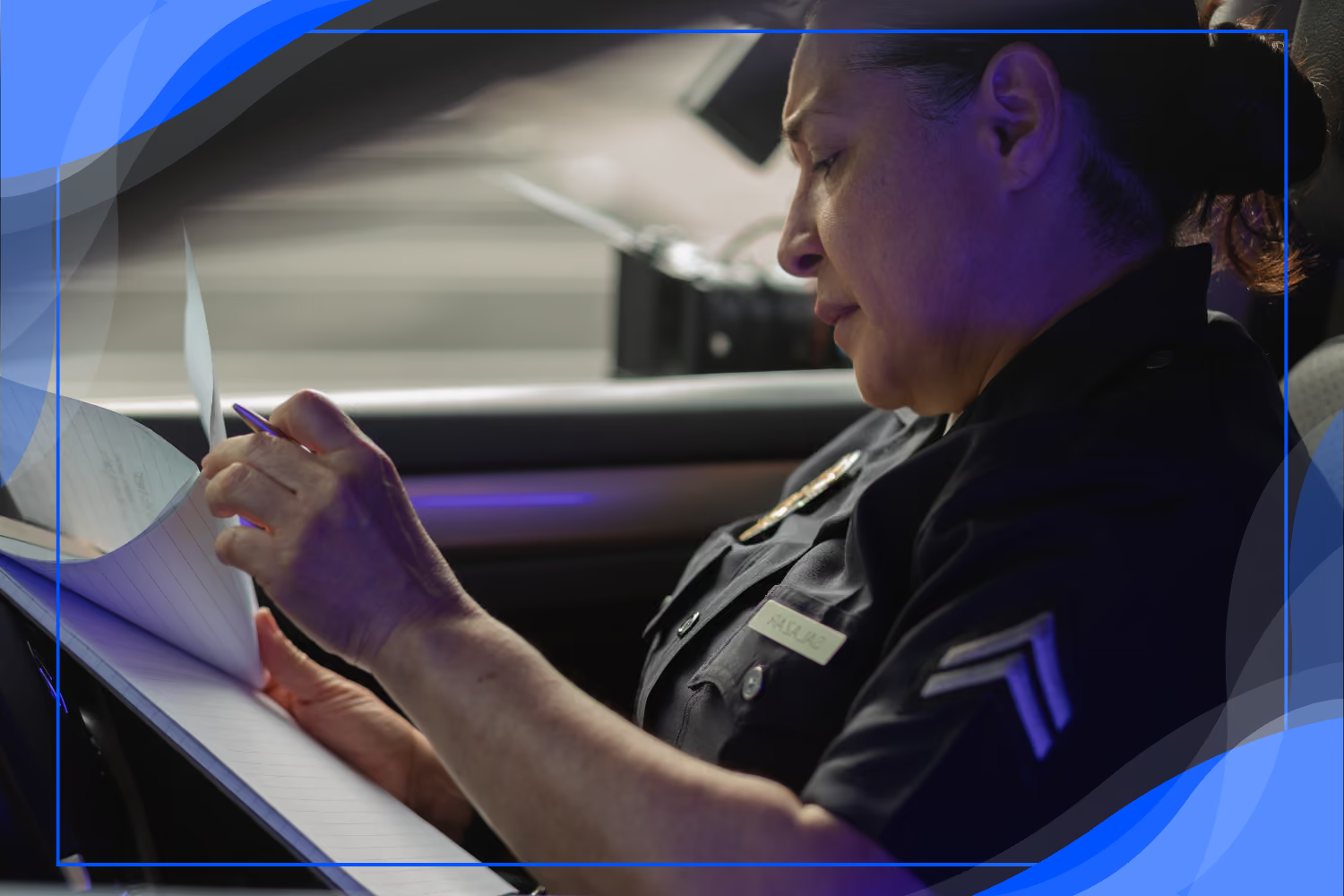
- A lot attendant at the gate documents the VIN, plate, and any condition notes on a paper form, or digital one on a desktop terminal back in the office — from memory and dependent upon whether the attendant does not forget to do this before the next vehicle arrives or other duties take precedence. One agency Autura works with shared that, before adopting integrated impound management software, they used electric heaters to dry out wet paper forms from the lot after intake during rain, sleet, and snowstorms – a fire hazard for their impound check-in trailer.
- Photos (if taken at all), often live on lot attendants’ personal phones – a burden to download and print to keep with the paperwork.
- Later, when a vehicle has remained unclaimed and is cleared for auction, a clerk manually re-enters that same vehicle information into a spreadsheet or an auction listing, calls a local auctioneer, and starts the disposition process.
Why Modernizing the Manual Impound Process Matters for Public Safety Teams
Impound is not a side task. It is a business, a real operational and financial burden that competes with a police department's core mission:
- Every hour a civilian tech or officer must spend on manual intake, re-entry, or vehicle auction coordination is an hour not spent on public safety work.
- Every day a vehicle sits unprocessed means storage fees, lot capacity limitations, and lost auction value.
- Every condition dispute from lack of documentation is unnecessary liability the department carries.
The public safety agencies and departments of transportation working to fix this problem are not doing by hiring more people and purchasing more space heaters. They are leveraging technology that closes the gap between the tow truck gate and the vehicle disposition record.
Integrated software, such as Aries Impound by Autura, that automatically pulls vehicle data from a tow provider’s towing management system means that information is captured only once, traceable through each stage of vehicle processing, and translatable all the way through final sale at auction.
A 4-Step Look at How Aries Impound Works
Aries Impound is the system of record for everything that happens to a vehicle once it arrives on a impound lot: intake, storage, fees, liens, and hold periods. The companion mobile app for lot operators, Impound Express, is the purpose-built front door into that system of record.
While exact practices vary across municipal impound lots, the process steps are generally as follows:
Step 1: With Impound Express app on their mobile phone or tablet in-hand, a lot attendant at the impound gate scans the vehicle VIN or a barcode, snaps timestamped condition photos, notes the section or area of the lot where the vehicle will be stored, and completes the check-in — no desktop terminal or paper forms required. If the police department or agency uses the Aries Dispatch towing management software, instead of scanning the VIN, the lot attendant can use existing dispatch information already present in the system (via direct Aries solution integrations) to verify information – further speeding up the check-in process.
Step 2: The attendant saves the recorded information, which flows straight into Aries Impound in real time, establishing a documented chain of custody from the moment a vehicle arrives, including timestamps.
Step 3: Once a vehicle's mandatory or automatic statutory hold period ends, it is eligible for disposition – which can mean releasing, transferring, scrapping, or selling the vehicle at auction. When it’s time to sell, that established Aries Impound record connects directly to the Autura Marketplace impound vehicle auction platform. That means all vehicle data needed to build an auction listing that draws buyers to bid and win the vehicle is already present — VIN, photos, and condition notes.
No outside auction services are needed. No rework is involved. Agencies can list hold-cleared vehicles for auction right away, setting their own reserve price and auction run time. Potential buyers on Autura Marketplace, from all across the country, are searching and bidding for vehicles just like these.
Step 4: Once a sale closes, Autura Marketplace, via Autura Verified Payments, automatically handles payment and sales tax before sending pickup instructions to buyers. This helps to guarantee agencies get paid by serious buyers.
Through tight integrations, Aries solutions create a continuous, digital thread from the initial tow to final vehicle title transfer.
7 Major Benefits of Integrated Impound Solutions vs. Manual Processing
- Purpose-built based upon industry best practices
- Single, efficient record entry — no re-keying vehicle data between intake and auction
- Documented, timestamped condition records for every vehicle, reducing liability on disputed claims
- Faster disposition, translating to more lot space availability
- No desktop terminal required for intake — works from a phone or tablet
- Direct flow of vehicle data into one of the nation’s largest unclaimed vehicle auction platforms, quickly placing inventory in front of a wider, verified, and engaged buyer pool compared to local, phone-based auction methods
- More time for PDs to focus on public safety instead of paperwork.
For departments already running their own lot, an impound management software solution like Aries Impound does not mean learning a new process. It means accomplishing the same work faster, more consistently and efficiently, and without the redundant steps and administrative burden.

.avif)